Beyond Liberalism: Toward a Revolutionary Culture - Part 1
By Eric Morrison-Smith
Part one is a reflection on the limitations of liberalism in movement spaces and why it often fails to sustain revolutionary solidarity.
June 29th, 2026
As our movements grow and evolve, we’re often forced to confront not just systems of oppression, but ourselves. These essays are part reflection, part challenge, and part offering. They ask: What kind of culture are we creating within our movements? And are we building it to last? Because if our movements aren’t growing and evolving, they’re decaying. And if we don’t learn to relate to one another differently—through accountability, grace, and transformation—we’ll keep replicating the very harm we claim to fight.
Part One is a reflection on the limitations of liberalism in movement spaces and why it often fails to sustain revolutionary solidarity. It explores how individualism, disposability, and performance culture infiltrate our organizing—and offers a call to shift toward deeper, more principled political practices rooted in transformation.
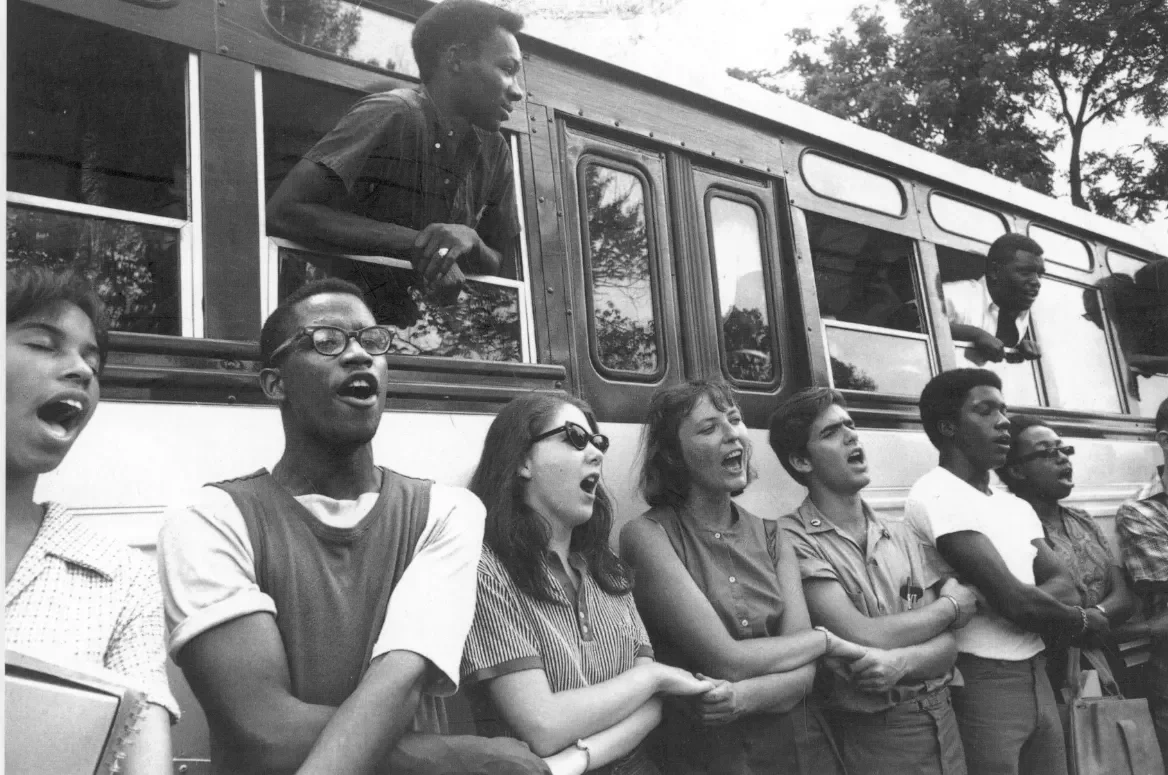
“I dissuade Party members from putting down people who do not understand. Even people who are unenlightened and seemingly bourgeois should be answered in a polite way. Things should be explained to them as fully as possible... I try to be cordial because that way you win people over. You cannot win them over by drawing the line of demarcation, saying you are on this side and I am on the other; that shows a lack of consciousness. After the Black Panther Party was formed, I nearly fell into this error. I could not understand why people were blind to what I saw so clearly. Then I realized that their understanding had to be developed.”
- Huey P. Newton, Co-founder of the Black Panther Party
There’s something I’ve witnessed, experienced, and continue to struggle with. What I’m sharing isn’t a final conclusion, but a developing theory—shaped by a decade of organizing, reading revolutionary texts, building coalitions with hundreds of groups, navigating the nonprofit industrial complex, and doing the personal work of learning and unlearning.
I’m starting to believe that liberalism is not built to sustain revolutionary solidarity, and can even turn well-intentioned people into reactionaries.
Before proceeding further, I want to ground this piece in a definition of liberalism—and make a clear distinction between liberal ideology, which is my focus, and liberal individuals. Liberalism is a political ideology rooted in the belief that individual rights, personal freedom, and equal opportunity are the keys to a just society. It assumes that justice can be achieved through gradual reform, legal protections, and market-based solutions, without fundamentally disrupting systems of capitalism, racial domination, or colonial power.
There are various strands of liberalism, including classical liberalism, modern liberalism, and neoliberalism; however, they ultimately operate within the same ideological framework. Liberalism dominates our political, economic, and social life in the U.S.. While Democrats and Republicans present themselves as polar opposites, they exist along the same liberal spectrum: committed to markets, carceral systems, and U.S. global dominance, just with different branding.
Even politicians considered “progressive,” such as social democrats (e.g., AOC or Bernie Sanders), still operate within liberalism’s limits, pushing for reforms without fundamentally disrupting the structure of power. That’s not to say their policies don’t matter—but it does mean we need to be clear about where they sit ideologically.
It’s also true that because liberalism is foundational to U.S. institutions and culture, most of us have been socialized into liberal ways of thinking and acting, whether we identify with the ideology or not. As revolutionaries like Kwame Ture, Lenin, Angela Davis, and Amílcar Cabral have argued, liberalism ultimately functions to stabilize oppressive systems—not dismantle them—by offering symbolic gestures and surface-level reforms instead of deep structural change.
So what does all this mean for how we show up with each other—in movement spaces, organizations, and relationships?
Liberalism doesn’t just shape our politics at the ballot box; it also influences how we handle conflict, define accountability, and determine who is worth engaging and who is disposable. It seeps into our organizing culture, training us to focus on optics over outcomes, isolation over transformation, and personal branding over collective growth.
We see it when someone makes a mistake and, instead of being invited into a process of accountability and repair, they’re shunned, gossiped about, or pushed out entirely. We see it when callouts are prioritized over community accountability, or when leadership is defined by charisma, popularity, or identity, rather than by lived experience, political clarity, and principled struggle.
It means that while liberalism provides us with the language of justice, it is still constrained by what is acceptable within its framework, and rarely concerned with building the power needed to overturn the systems that have harmed our communities for generations.
It discusses healing and restorative justice, but we rarely apply these practices to one another, only to the communities we claim to serve. It often leads us to see ourselves as saviors, not unlike the administrators of colonial schools—“helping” the poor and uneducated, but never questioning the system of colonialism itself.
Liberalism teaches us how to critique others, institutions, and power structures—but not how to transform ourselves in the process. And certainly not when that transformation would require us to confront the systems that protect our own wealth, property, or individual privileges.
It prioritizes performance over praxis.
Purity over process.
Callouts over commitment.
Ego over ecosystem.
And then, we express frustration about the in-fighting or the people who just don’t get it, rather than pausing to reflect, take accountability, and ask how our approach might be part of the problem.
It’s time we break from sloganeering and the liberal framework—and begin building an approach that brings more people into the fold. One that recognizes, like Huey said, that people’s consciousness must be developed. One that centers relationships and material conditions. One that actually operates as if we’re in a revolution.
Because we are.
And revolution is a protracted struggle—one that requires patience, self-transformation, and collective transformation. One that sees individual, community, and organizational contradictions not as fixed or forever flawed, but as opportunities to evolve.
To become better. To become more revolutionary. To remember that revolution and evolution are inseparable—and that’s the beautiful work we get to do together.
If we don’t make this shift, we’ll keep replicating the same dynamics—dogmatism, disposability, control, avoidance, and punishment—that we say we’re here to dismantle.
»»»
You can find the rest of this series at Notes from a Black Revolutionary on Substack.
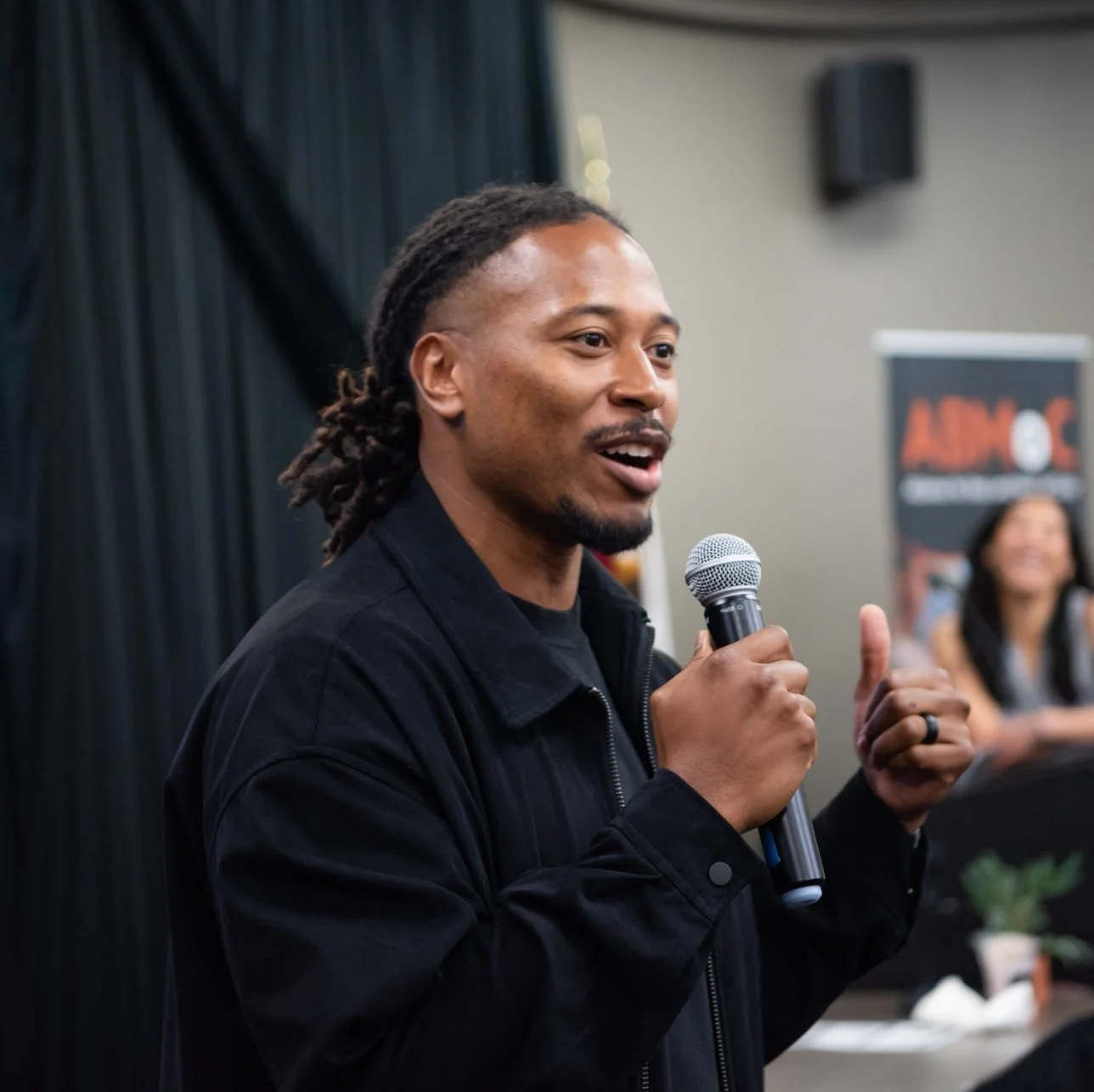
Eric Morrison-Smith is a Black revolutionary and Director of @allianceforbmoc. Always learning, reflecting, evolving. Writing to express hisself and the things he is challenged by.