A Few Notes On Styrofoam For Yarrow
By Kiese Laymon
“This is the last offering from the holy land Catherine Coleman built. The soft goodness that Mama’s mama conjured in her pink shotgun house, on that stolen indigenous land, in the Blackest, poorest state in the nation, has been eaten up by unquenchable appetites for suffering and artificially intelligent Americans intent on making America great, but never good.”
June 29th, 2026
I am writing this to Yarrow because a real human somewhere believes that a something without a body, or desire, or cousins and ‘nem, can make art out of mourning better than me. I am also writing this to y'all because an American worker used a bone saw, guided by a technological something, to cut off my Grandmama’s left leg. And another American worker, guided by a technological something, threw my Grandmama’s left leg in the garbage eight days after her 95th birthday.
Those two American workers used technological somethings to save my Grandmama’s life. Those two American workers were great at their job. Grandmama did not die 25 days after her 95th birthday.
Grandmama died 26 days after her 95th birthday.
The workers were so good at cutting off, and disposing of, old dead black legs, with the help of technology, and a family practiced in avoiding mourning.
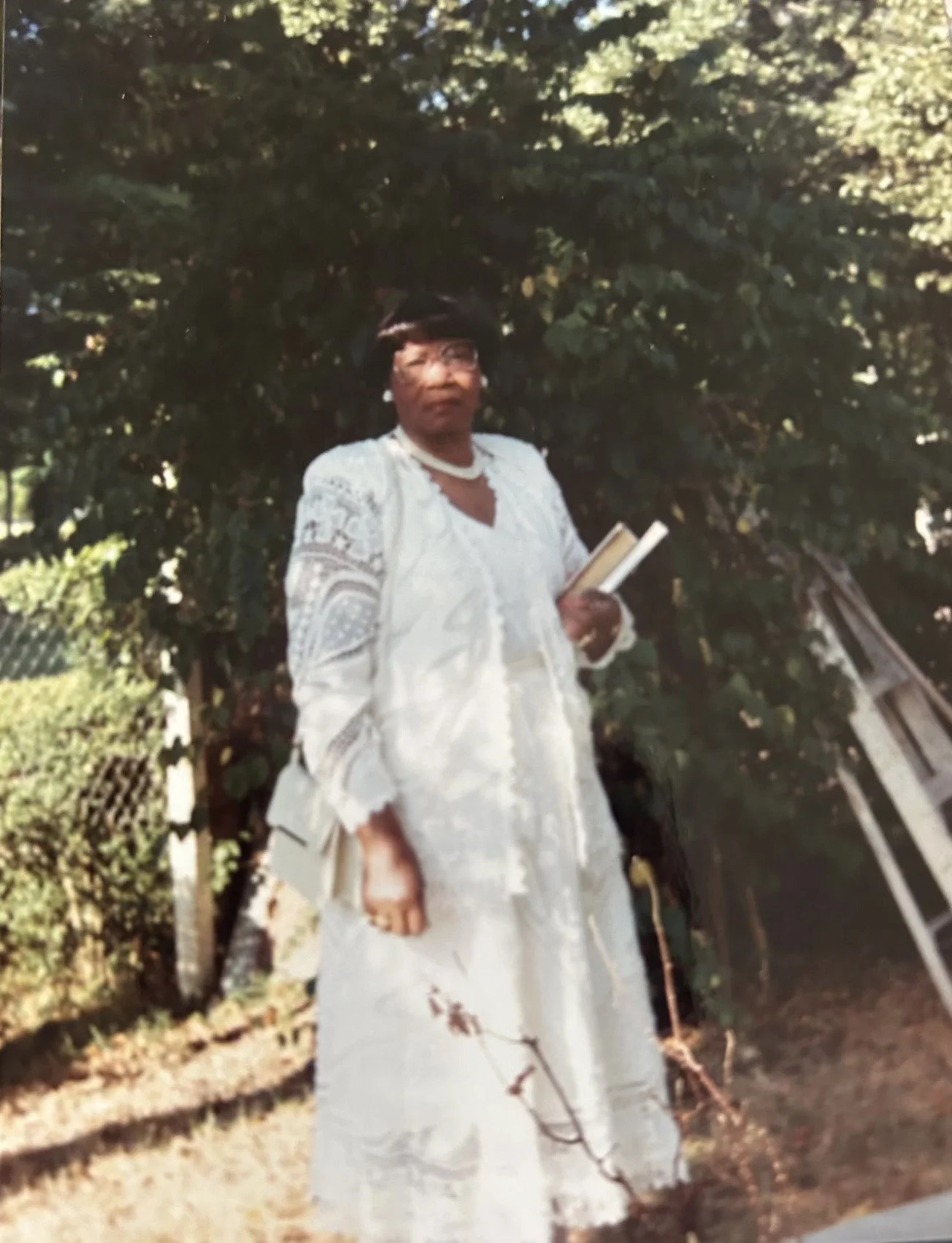
This is the last offering from the holy land Catherine Coleman built. The goodness that Mama’s mama conjured in her pink shotgun house, on that stolen indigenous land, in the Blackest, poorest state in the nation, has been eaten up by unquenchable appetites for suffering and artificially intelligent Americans intent on making America great, but never good. Democratic, but never fair.
Hard and mechanical.
Seldom soft and good.
We have all been gobbled up by mourning the dead, yes, but most of all, we have all been mourning the soft. The soft is not innocent. It is wholly implicated in all things bloody. But it remains soft in victory and defeat. I would like y'all to understand that before there was artificial intelligence and mannish ghouls intent on making America great but never good, there was Styrofoam.
Styrofoam was softer to the touch, and harder for the earth.
Before there was Styrofoam, and its hard destructive, manufactured softness, there was the inability to mourn. Everything died. And the Styrofoam did not mourn. The people longed to become Styrofoam so they could not mourn.
But we, who make art for a living, we are here to mourn, they say.
We are here to say something more than, “Ghouls of great cheated. They won.”
They cheat, we know. It is hard to beat eaters of heartmeat, because they literally eat heartmeat.
They lost when they licked their lips while looking at their own children. They literally eat heartmeat. They died when they ate their children’s heartmeat.
They long to eat our children’s heartmeat, and call it history.
I would like y'all to understand that we eat our children’s heartmeat, too. I can talk about that later. But inside American rooms, we ate. We got eaten. We cheated. We got cheated. In and out of American rooms, my Grandmama said we should never eat their children’s heartmeat.
I’m a ghost. Not a ghoul.
Sike.
I'm a ghoul.
But I cannot eat the heartmeat of my enemy's children. We could. But we will not.
Because I actually do know where home-training goes when home, our holy place, is gone. Home-training goes to work when home is gone. Home scraps and digs and dings and dreams and paints a new holy place if you are a Black southern artist raised by a mighty Black woman too good for an America, too and God for Christianity, and way too obsessed with getting her lick back.
I want yall to see what made me, but way more than that, I need Yarrow to care about how I make Grandmama, Jackson, Forest, America, me, us, with sentences, sections, punctuation, chapters, poetry, pauses, fiction, song, call, response, white space and consent. I do not know how much I should show y’all, even though y’all are where I do my best showing.
I want y'all to understand that so much of what I thought we’d never lose, we lost or gave away or were robbed of, and it is very sad here for the living.
My grandmother died a year and a half ago. She deserved to die a soft death of her choosing. She did not die a soft death of her choosing. I have spent the last sixteen months imagining what a death of my Grandmama’s choosing would have looked like, and I think – more than anything – we, the people Grandmama made, should have been softer with each other. We were not softer with each other when her body was alive. We have not been softer with each other since her body died.
The longer I live in this place, the more I know that softness in this world is a miracle, and miracles are good, especially in those of us lucky enough to age. I understand that soft things get smashed.
But we aren't things. They brought us here as technology. But we were never things.
We were always flesh. Always fleshy. We were always round, soft, hard, fleshed out characters who survived. And died. And survived. And carried on. We carried on. We were never simply technology, yet we are the freshest technologians, and the freshest mourners. That is why I am writing to y'all.
I have always mourned dead people. More than mourning dead people, I have always mourned dying people.
The worst of white folks have always demanded we suffer and die prematurely. Some call perpetually mourning dying people anxiety. Others call perpetually mourning dying people compulsion.
It is that, and it is that, and it is so much more. I honor, and care for, and mourn dying people, and that felt like it was okay before Grandmama died. In life, she deserved a nation and a village that loves the living that people do before they die. In death, I am attempting to become a grandchild who loves the living that people do here before we die.
We deserve not to always expect catastrophe, even if catastrophe is a big part of what we always get. There is always, in one way or another, good. There is always, in one way or another God. There is always, in one way or another, generative Godlessness.
Here, in this place where tragedy is infinite, there is always something to make, and something to revise. There is always something to repair. Thank y'all for holy space, for allowing me into any of your holy spaces. I wish for Yarrow nothing more than a community of soulful artfolk willing to get kind and funky. Thank Yarrow for offering an invitation to make something fleshed out together.
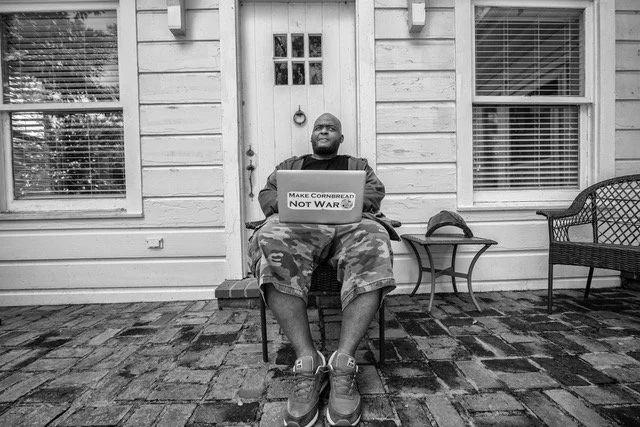
Kiese Laymon is the author of a number of books, including Heavy: An American Memoir and the forthcoming Good, God. He is the Moody Professor of English and Creative Writing at Rice University.